What Is a Commonplace Book?
And Why This Centuries-Old Practice Might Be Exactly What We Need Today
If you missed last week's essay introducing The Encyclopedia of Ordinary Days, you might enjoy reading it first. Then come back here—we're going to travel back a few centuries.
Last week, I shared a glimpse into a project I've come to call The Encyclopedia of Ordinary Days—a place to gather the overlooked moments that quietly become a life. As I've continued thinking about it, I've realized that what feels deeply personal is also part of a tradition that stretches back hundreds of years.
Turns out, it has a name.
A commonplace book.
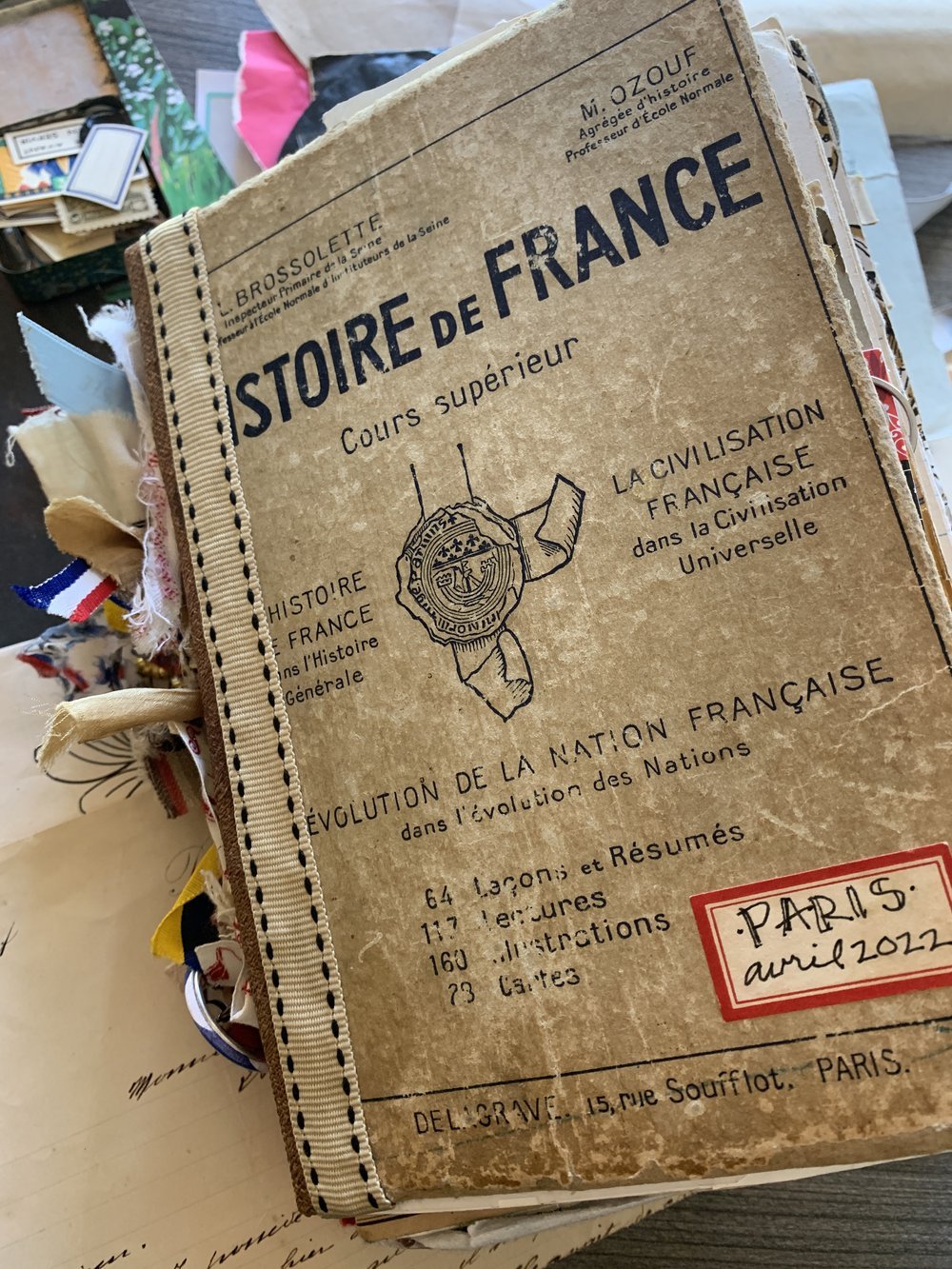
Imagine opening a notebook that belonged to someone two hundred years ago.
Inside you find a pressed violet. A recipe copied from a neighbor. A favorite poem written carefully in ink. A sketch of a bird seen on an afternoon walk. A shopping list tucked beside a letter. A newspaper clipping. A watercolor swatch. A quotation that once stopped someone in their tracks.
It isn't quite a diary.
It isn't a scrapbook.
It isn't a sketchbook.
It's something delightfully difficult to define—and perhaps that's exactly why it has endured for centuries.
A commonplace book is simply a place to gather what you don't want to forget.

The word commonplace comes from the Renaissance idea of collecting "common places" — shared ideas, quotations, observations, stories, recipes, and bits of knowledge worth returning to. Writers, artists, philosophers, scientists, and curious everyday people kept them as personal libraries long before search engines and cloud storage existed.
Rather than organizing life chronologically, they organized it by affection.
By curiosity.
By wonder.
They collected whatever caught their attention and trusted that, somehow, it all belonged together.
I find that incredibly comforting.
Because so much of modern life asks us to organize, categorize, and optimize. We are encouraged to document milestones, curate highlights, and archive our best moments.
A commonplace book quietly suggests something different.
Keep what delights you.
Keep what moves you.
Keep what makes you pause.

What belongs inside a commonplace book?
Almost anything.
A museum ticket.
A paint swatch mixed to match the evening sky.
A feather found on your morning walk.
A recipe from your grandmother, written on the back of an envelope.
A favorite sentence from the novel on your bedside table.
The menu from a memorable dinner.
A pressed maple leaf.
A watercolor experiment.
A conversation overheard in a café.
The color of your garden in late July.
A question you can't quite answer.
A tiny photograph.
A scrap of handmade paper.
Tuesday.
That last one might be the most important.
Birthdays tend to remember themselves.
Vacations come with photographs.
Holidays have traditions.
But most of our lives are made up of ordinary Tuesdays.
The cup of coffee before anyone else is awake.
The flower blooming unexpectedly beside the sidewalk.
The grocery receipt tucked into your pocket after stopping for peaches.
The phone call with an old friend.
The page of a book that arrived exactly when you needed it.
These are the moments that quietly become a life.

For years, without realizing it, I've been keeping my own version of a commonplace book.
My journals have always held more than words. They hold bits of vintage paper collected on my travels. Paint. Postcards. Museum tickets. Color palettes. Tiny observations. Grocery lists. Collage. Photographs. Leaves. Notes scribbled while waiting for an appointment. Fragments of poems. The occasional feather.
They're not organized.
They're not polished.
They're simply... alive.
Over time, I found myself reaching for another name.
Not because "commonplace book" didn't fit, but because another image kept appearing.
An encyclopedia.
Not the kind lined up on a library shelf.
An encyclopedia of one ordinary life.
A place where the seemingly insignificant moments are given equal footing with the milestones. Where an afternoon spent painting collage papers belongs beside a passport stamp. Where the changing colors of autumn deserve as much attention as a birthday celebration.
A place where the ordinary is honored.
That's how The Encyclopedia of Ordinary Days was born.
It's my own interpretation of this beautiful, centuries-old tradition—part commonplace book, part artist's book, part visual journal, part archive of a life lived with open eyes.
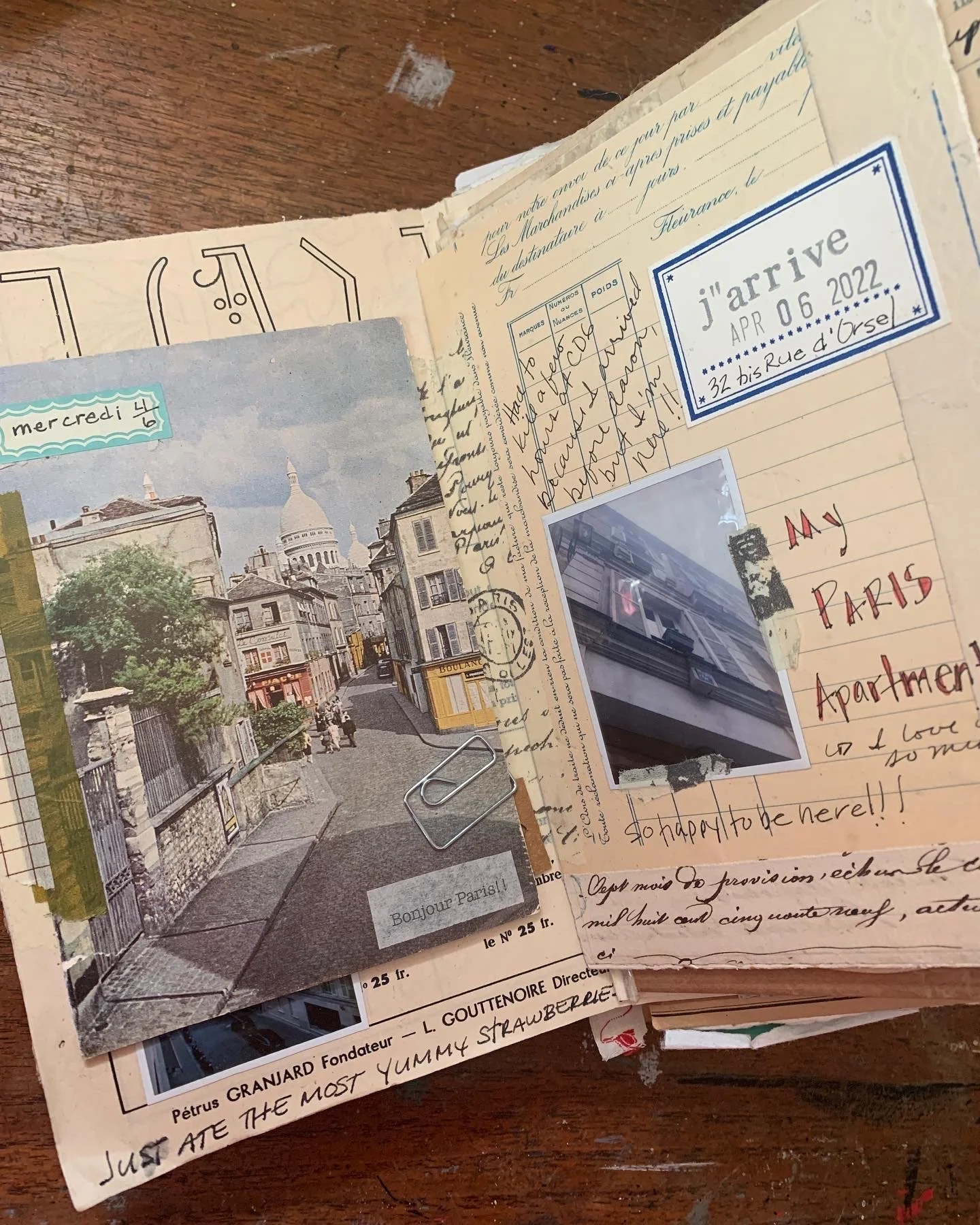
Perhaps that's what a commonplace book has always been.
Not a book of perfect pages.
Not a record of accomplishments.
But a quiet reminder that paying attention is its own kind of art.
So today, I have an invitation: find a notebook.
It doesn't have to be beautiful.
Tuck one ordinary thing inside.
A receipt.
A leaf.
A color swatch.
A sentence you don't want to forget.
A photograph.
A pressed flower.
Write a few lines about why it mattered.
That's how every commonplace book begins.
And perhaps, without even realizing it, you'll have started your own encyclopedia of ordinary days.