Collecting Your Life
For a long time, I’ve been interested in noticing.
The small things. The ordinary things. The things we walk past every day because we think we already know them.
The light moving across the kitchen table. A sentence overheard in a coffee shop. The particular blue of the evening sky. A grocery list tucked into a pocket. A flower growing through a crack in the sidewalk. The way someone you love always tells the same story.
I’ve written often about paying attention to these things.
But lately, I’ve become interested in what happens next.
What do we do with what we notice?
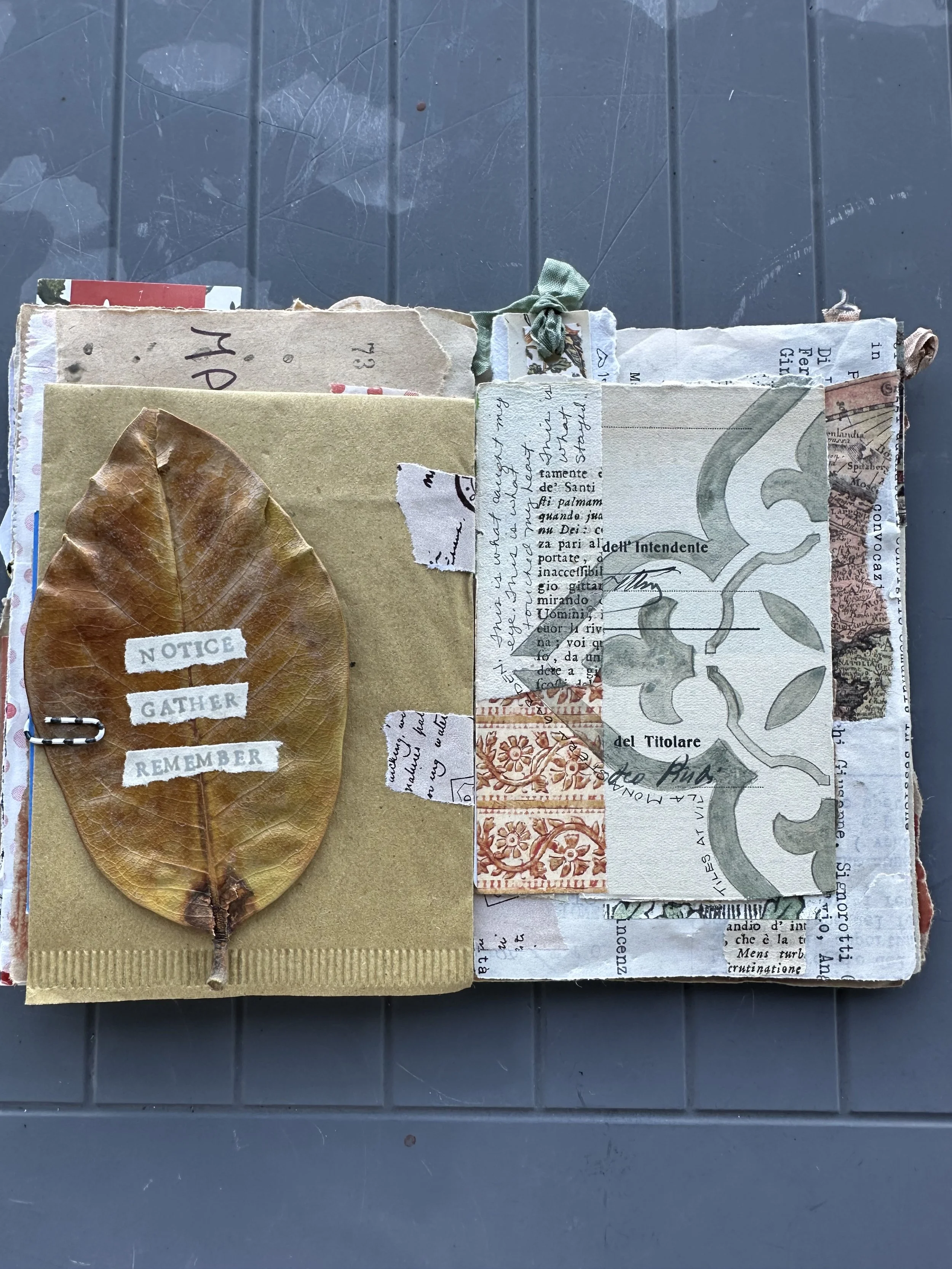
I think we begin to collect it.
Not necessarily by filling our pockets with things. Collecting doesn’t have to mean acquiring more stuff. Sometimes it does mean picking up the stone or saving the ticket stub or slipping the fallen leaf between the pages of a notebook.
But it can also mean taking a photograph.
Writing down a sentence.
Mixing a color.
Making a quick sketch.
Saving a recipe.
Recording the name of a bird.
Keeping the scrap of paper.
Remembering the story.
Collecting begins with a tiny act of recognition:
This caught me. I want to keep it.
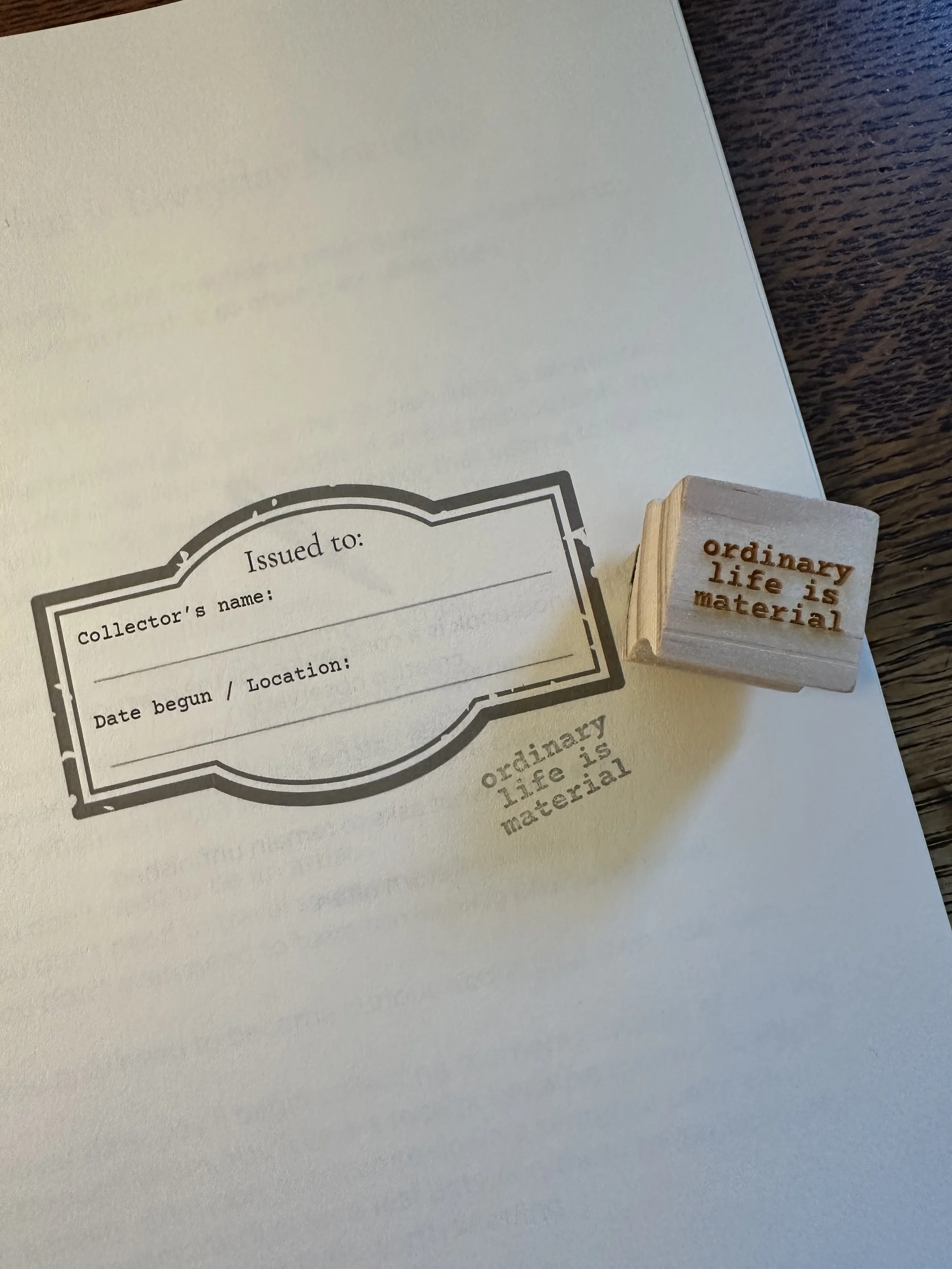
Ordinary Life Is Material
I’ve been saying this a lot lately:
Your ordinary life is material.
And I mean that in more than one way.
Our lives are filled with material worth noticing and keeping—the physical evidence of where we have been and how we have spent our days.
Receipts and photographs. Notes and lists. Stones and shells. Ticket stubs and maps. Bits of ribbon and interesting packaging. Things said around the dinner table. The view from the window. The flowers growing beside the road.
But these things are also creative material.
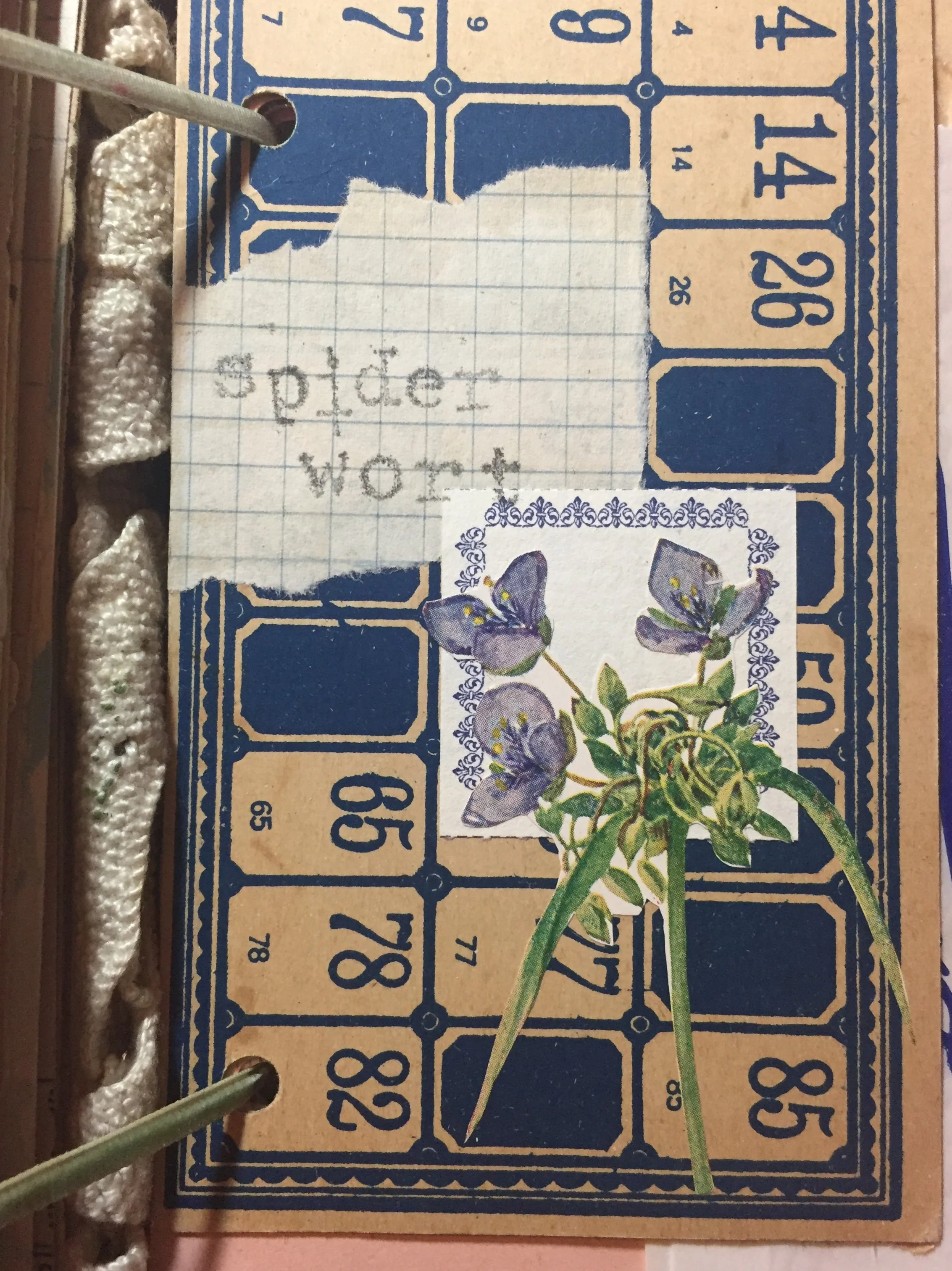
A scrap can become part of a collage.
A photograph can become the beginning of a painting.
A sentence can become a poem.
A handful of colors noticed on a morning walk can become a palette.
A family recipe can become a story.
A collection of small objects can become an assemblage.
A week of noticing can become a page, a folio, a box, a book.
We tend to think of creativity as making something new.
But I’m increasingly interested in another possibility:
What if creativity is also a way of responding to what is here, right in front of us?
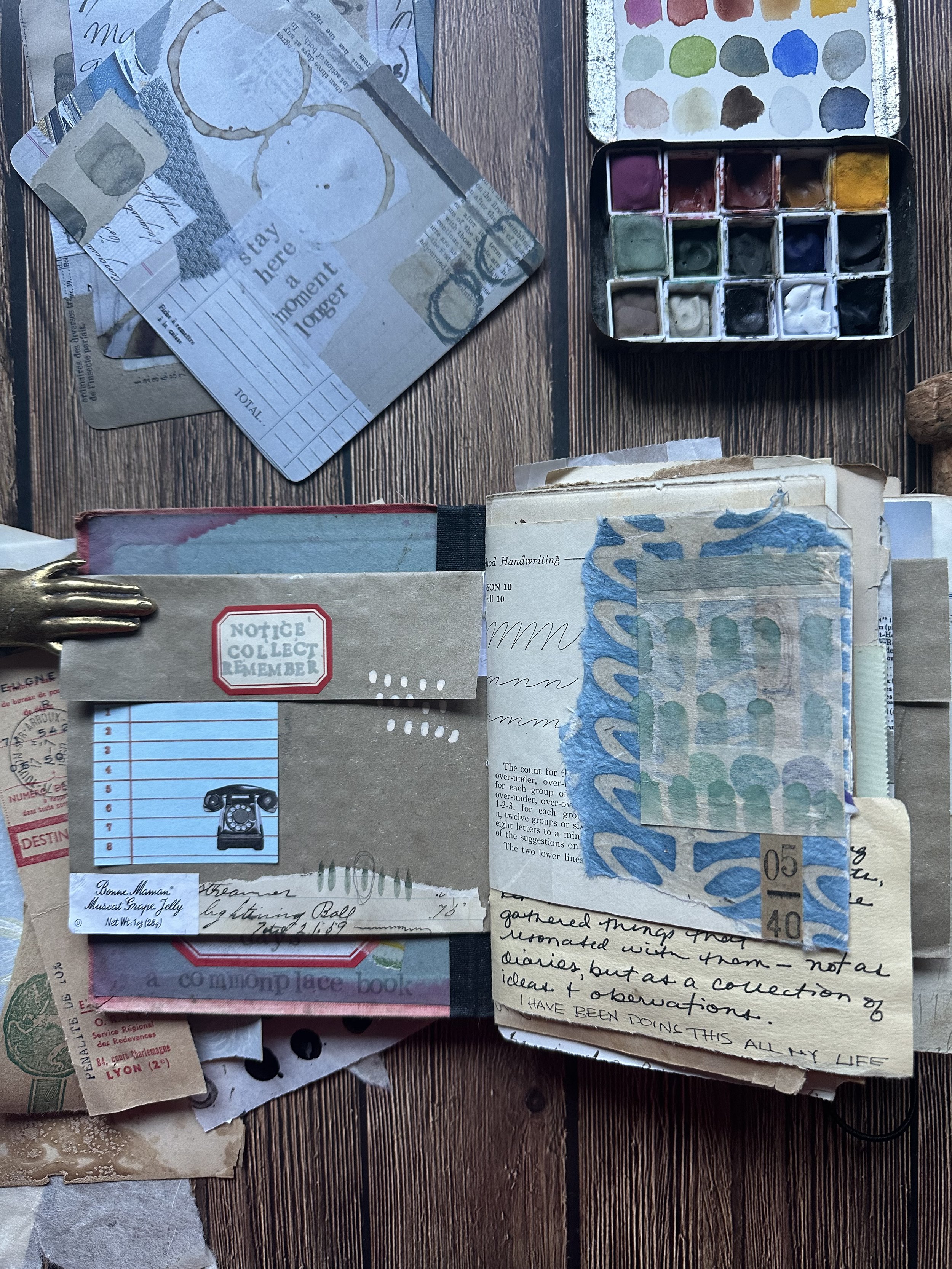
The Practice of Collecting
When we collect our lives, we begin with attention.
We notice something.
Then we choose it.
We gather it.
We arrange it beside something else.
We write about it. Photograph it. Draw it. Paint it. Paste it down. Put it in a box. Tell someone about it.
Maybe we transform it.
Maybe we simply keep it.
Notice.
Collect.
Keep.
Make.
Each of these is a creative act.
And the more we practice them, the more the world seems to offer us.
We begin to notice the particular handwriting on an old recipe card. The typography on a paper bag. The shape of a seedpod. The pattern made by coffee rings. The colors in the produce aisle. The strange little sentence printed at the bottom of a receipt.
Not because these things have suddenly become interesting.
Because we have become interested.
We are developing a relationship with the material of our own lives.
You Don’t Have to Keep Everything
There’s something else I’m learning about collecting.
It requires choosing.
The point isn’t to preserve every moment or keep every scrap. It isn’t to create a complete record of a life.
We couldn’t if we tried.
Most of our days will disappear.
Conversations will be forgotten. Meals will be eaten. Flowers will wilt. Seasons will change. People we love will grow older. So will we.
Collecting doesn’t stop any of that.
I don’t think it’s supposed to.
Instead, collecting asks us to be present enough to say:
This.
This color.
This sentence.
This afternoon.
This funny little piece of paper.
This stone I found on my walk.
This moment at the kitchen table.
This is worth my attention.
And perhaps that is the real practice.
Not preserving a life.
Participating in it.
Collecting Your Life
I’ve begun thinking of all of this as collecting your life.
Not a project to finish.
Not an archive that has to be beautiful.
Not another obligation to add to your day.
A practice.
A way of moving through the world with curiosity.
A way of paying attention to the places we inhabit, the things we gather, and the lives unfolding around us.
You might collect color.
Words.
Photographs.
Stories.
Recipes.
Marks.
Objects.
Sounds.
Questions.
Things found on walks.
Things left behind by people you love.
Evidence of Tuesday.
There is no correct collection.
The question is simply:
What is asking for your attention?
And then, perhaps:
What might you do with it?
You could tuck it into a notebook.
Start a box.
Make a page.
Write a story.
Paint something.
Create a tiny archive of this particular season of your life.
Or you could simply hold it for a while and see what it wants to become.
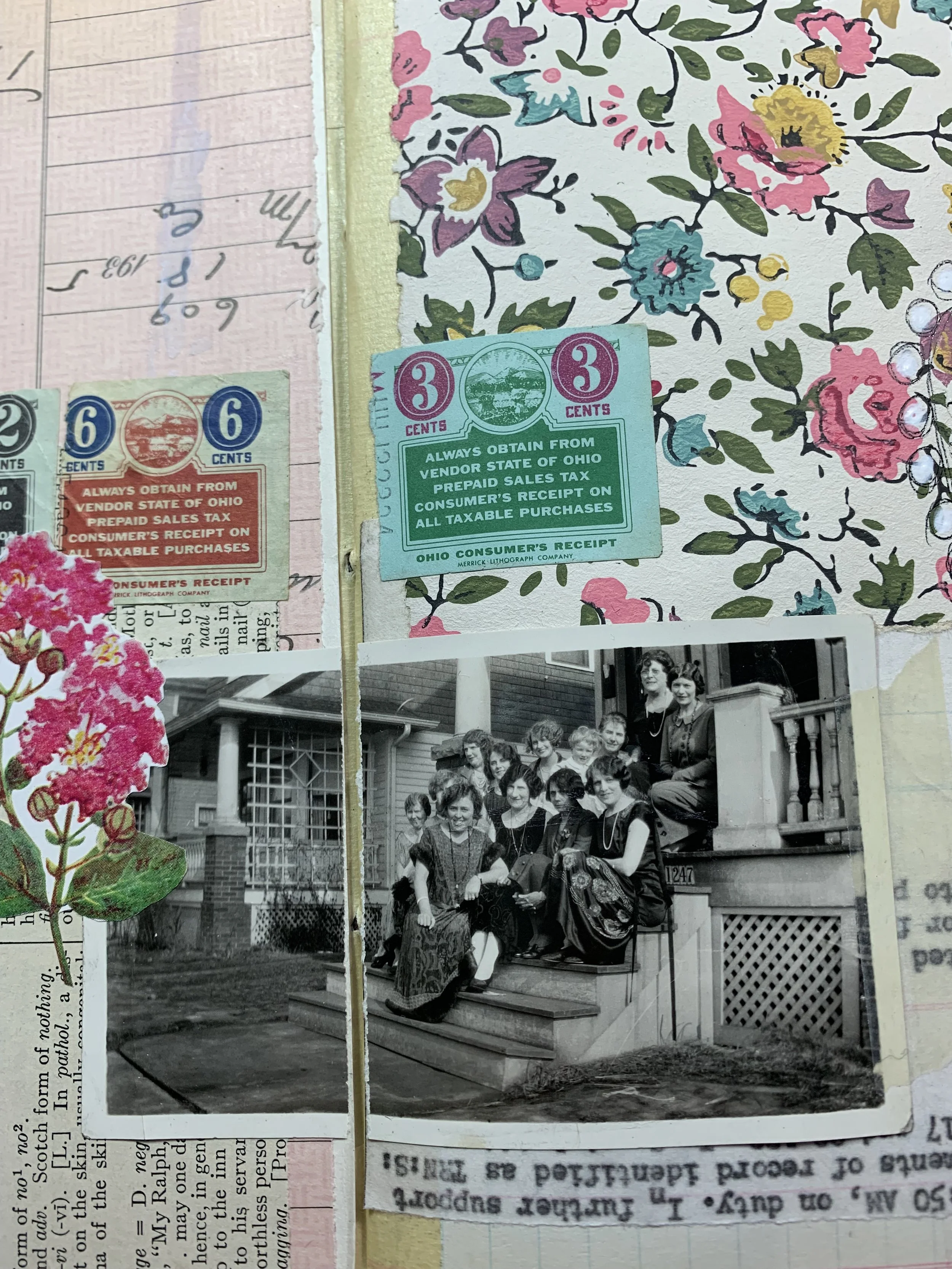
A scrap becomes a page.
A color becomes a painting.
A sentence becomes a story.
A walk becomes a collection.
An ordinary Tuesday becomes part of an archive.
And slowly, almost without realizing it, we begin building a body of creative material that could only have come from one place.
Our own lives.
That may be what I love most about this practice.
You don’t have to go looking for inspiration somewhere else.
You don’t have to wait for an idea.
You don’t have to begin with a blank page and invent something from nothing.
You can begin with what is already here.
Notice it.
Collect it.
Keep some of it.
Make something from it.
And then go back out into your life and look again.
I’m beginning to think this might be the shape of a creative life.