On the return to analog, the pleasure of imperfect things, and why our hands might know something we've forgotten.
We have machines that can write our letters, organize our lives, generate images, answer our questions, and deliver almost anything we want to our front doors by tomorrow afternoon.
And what are we doing?
We're buying typewriters.
We're learning to embroider. Making sourdough bread. Keeping paper journals. Printing photographs. Sending postcards through the actual mail.
We're cutting things out with scissors and gluing them onto other things.
It's rather wonderful, when you think about it.
At the very moment technology promises to make our lives faster, easier, and more efficient, a growing number of us seem to be saying, Yes, but what if I'd rather do it myself?
I've been watching this return to analog with enormous interest. Not because I think it's new, exactly. People have been knitting, stitching, painting, baking, and keeping journals all along.
But something about the renewed enthusiasm feels different.
It feels less like nostalgia and more like a response.
A quiet, collective reaching for something we didn't realize we'd been missing.
The world has become very good at making things disappear.
Photographs live somewhere in a cloud. Conversations arrive and vanish in a stream of messages. Our calendars, shopping lists, correspondence, music, books, and memories increasingly occupy the same small rectangle of glass.
We have access to more information, more inspiration, and more creative possibility than any generation before us.
And yet.
Something seems to be missing.
Perhaps it's the weight of a book in our hands. The sound of a pencil moving across paper. The small resistance of a needle passing through cloth. The evidence of our own participation in making something exist.
I've noticed a growing interest in analog hobbies, particularly among women. Younger women are discovering crafts their grandmothers practiced. People are organizing craft nights, joining book clubs, exchanging handwritten letters, and buying journals they intend to actually write in.
Of course, people have been making things by hand all along. This isn't a new invention, and it certainly isn't the exclusive territory of women.
But I wonder whether the renewed enthusiasm is telling us something about what we're hungry for.
Not more productivity.
Not another opportunity to turn our leisure into a side hustle.
Something slower. More tactile. More human.
Making something is different from consuming something.
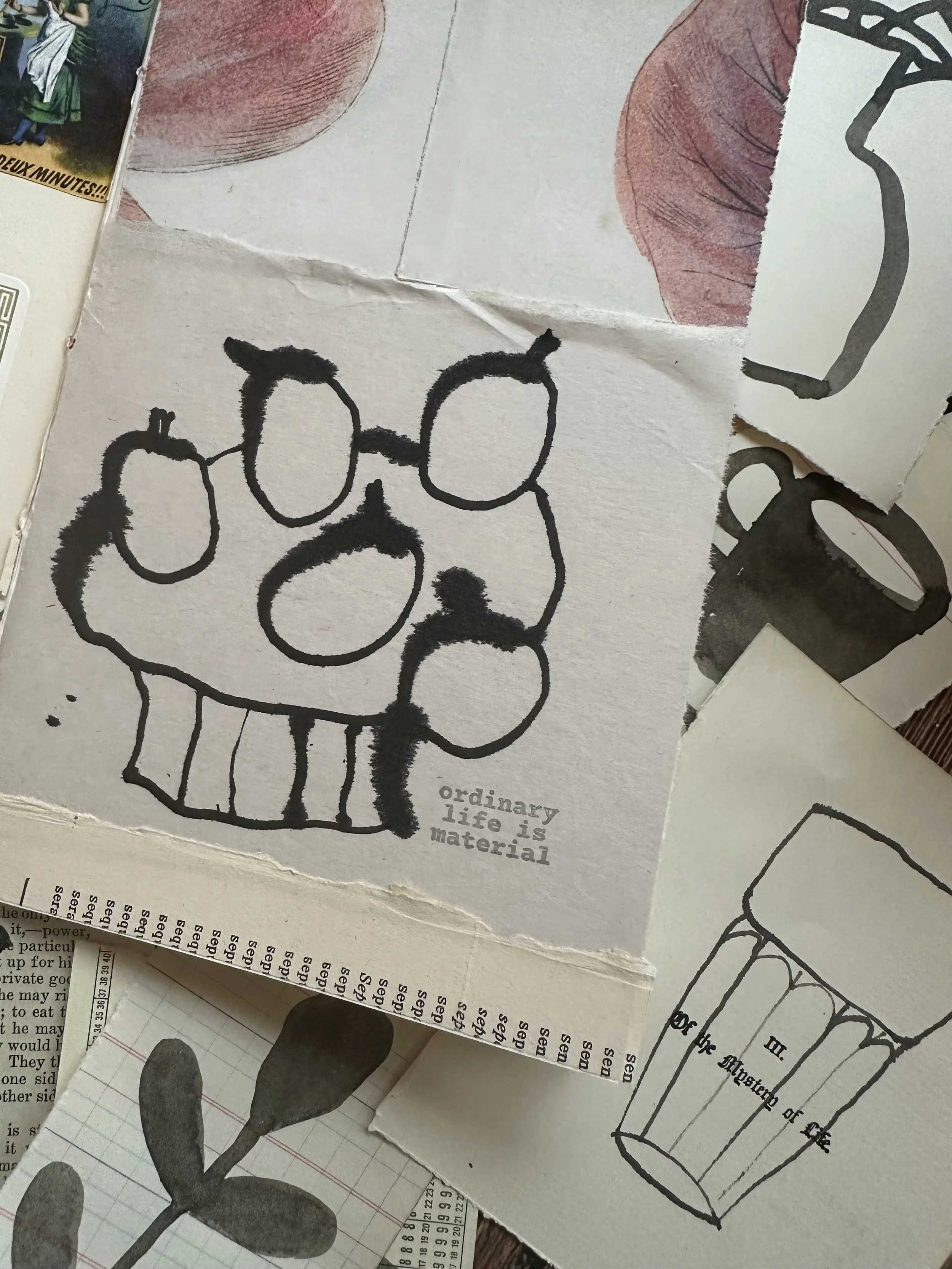
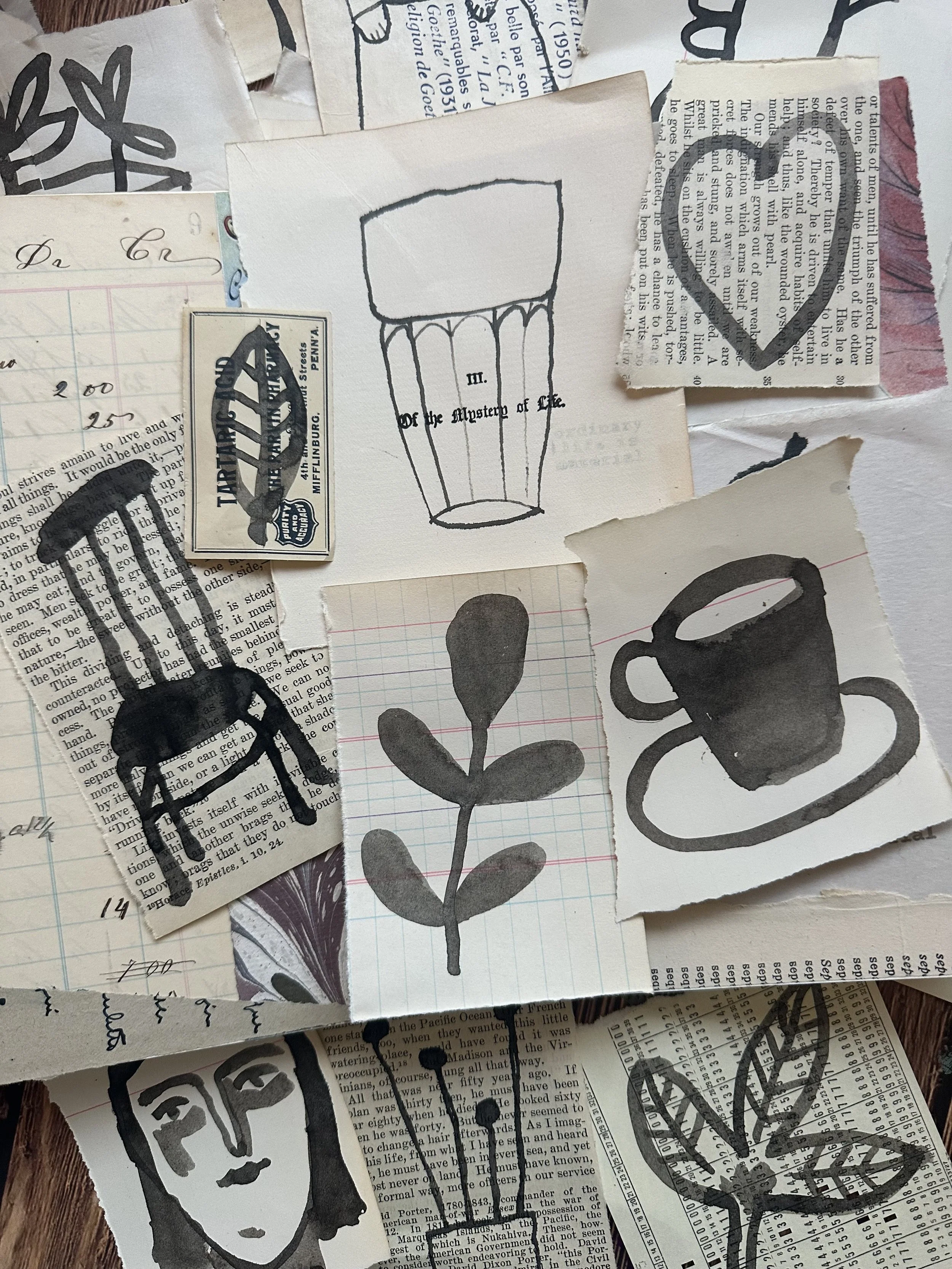
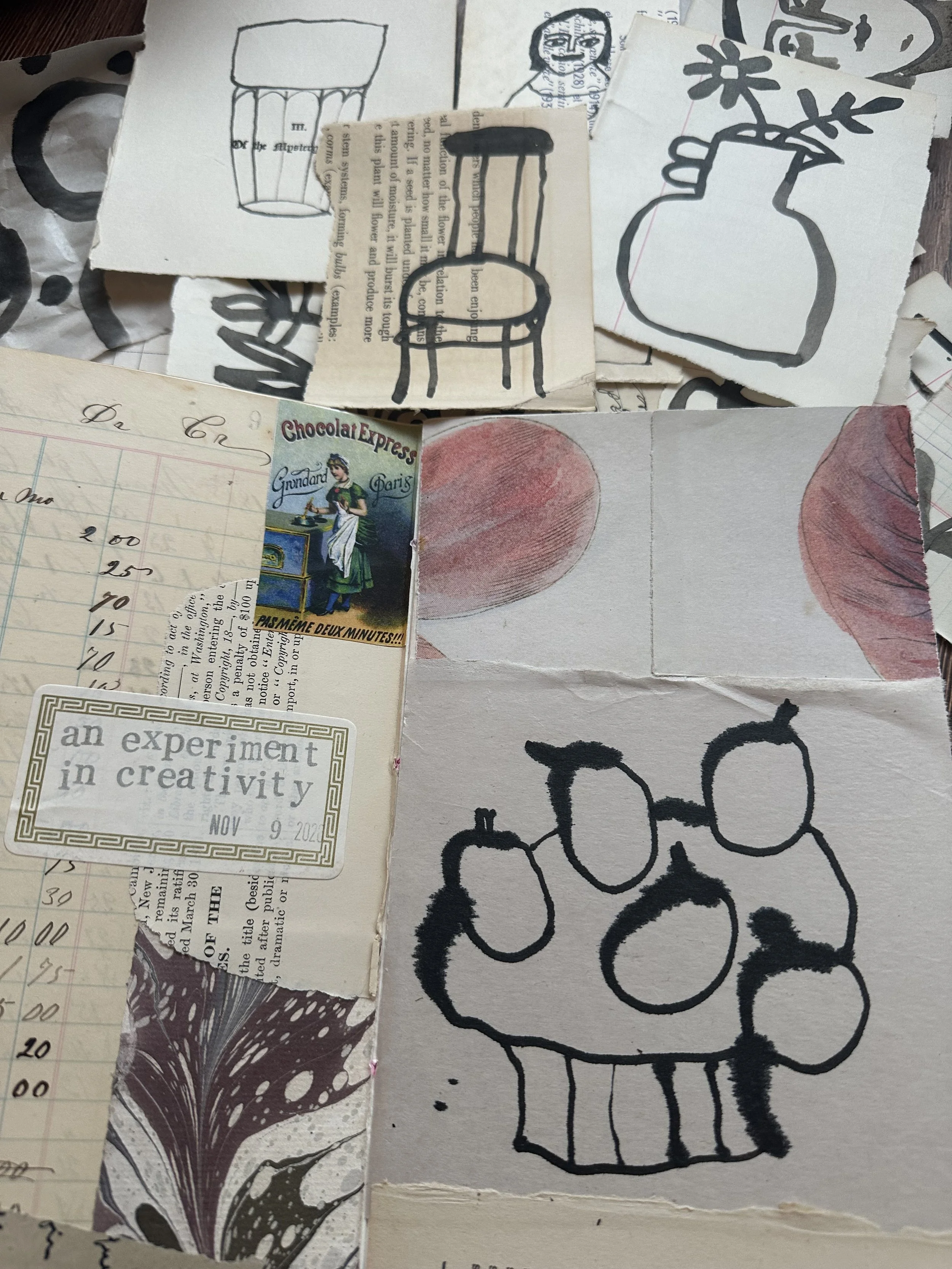
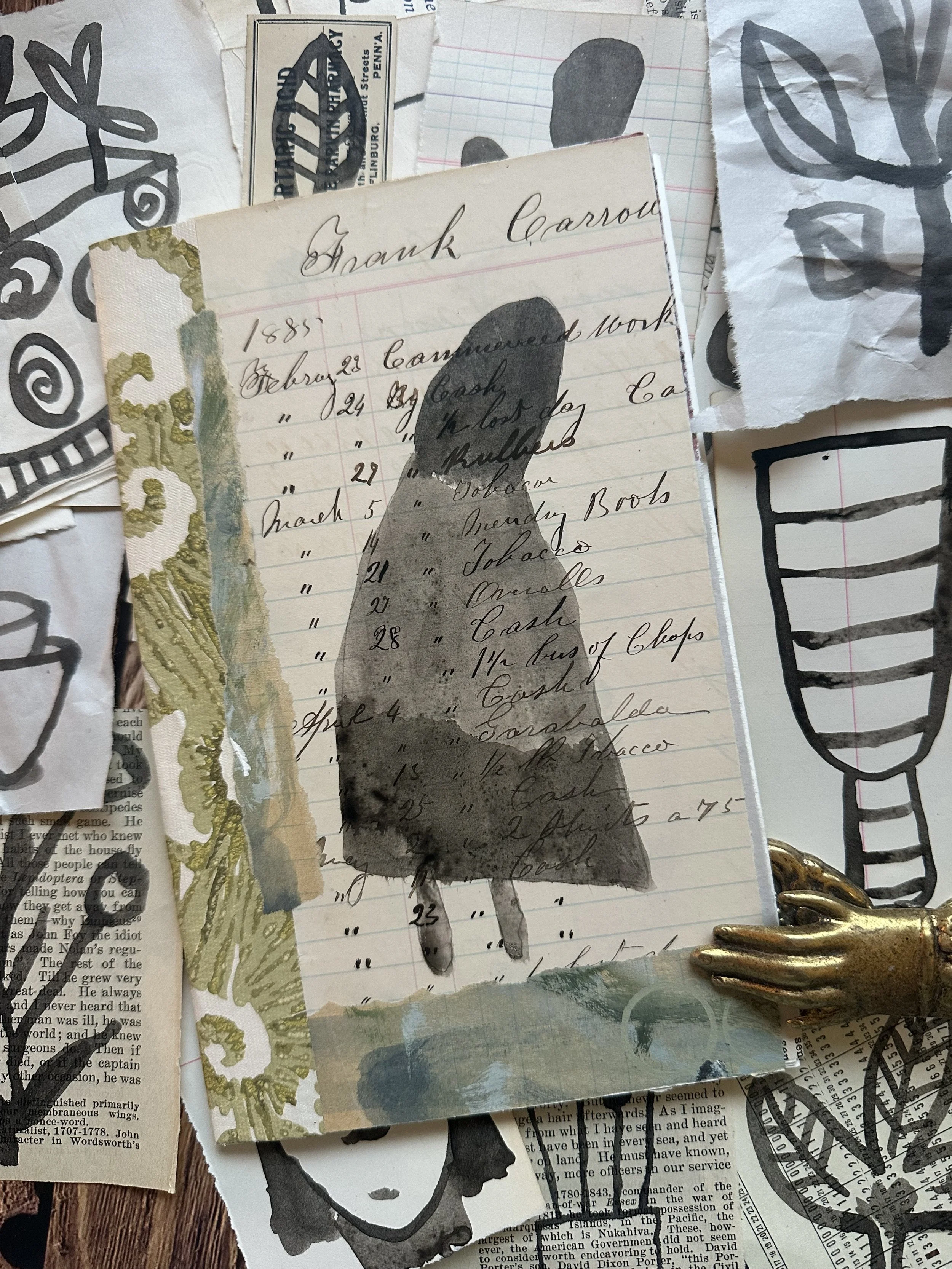
I spend a great deal of time in my studio cutting paper, arranging fragments, stitching little books, and gathering ordinary evidence of my days.
Sometimes I make something I love.
Sometimes I make something spectacularly unremarkable.
And sometimes I spend an entire afternoon moving three pieces of paper around until I decide I liked them better where they started.
None of this is particularly efficient.
Which might be precisely why I love it.
So much of modern life encourages us to measure the value of an activity by its outcome. What did we accomplish? What did we produce? Could we do it faster? Could we automate it? Could we share it? Could we monetize it?
But what if the value is in the doing?
What if an afternoon spent making a crooked little book is an afternoon beautifully spent, regardless of whether anyone else ever sees it?
When I make something with my hands, I become more aware of the passing hours. I notice the texture of the paper, the way colors behave beside one another, the sound of thread pulling through a fold.
My attention settles.
I'm not thinking about the next thing quite so much.
I'm here.
And in a world that seems determined to pull our attention in a thousand directions, being here feels increasingly precious.
The beauty of leaving evidence.
There's another reason I love making things by hand.
They remain.
A letter tucked into a drawer. A recipe written in someone's familiar handwriting. A photograph with a date scribbled on the back. A little book filled with ticket stubs, pressed leaves, and fragments of an otherwise unremarkable Tuesday.
These things become evidence.
Evidence that we were here. That we noticed. That we cared enough to keep something.
I think about the ordinary objects that survive people. The recipe cards, the sewing baskets, the handwritten notes slipped between the pages of books. Things that weren't necessarily intended to become heirlooms but somehow did.
Their value isn't in their perfection.
It's in the presence of the person who made or kept them.
A handwritten letter carries something an email cannot quite replicate. The shape of someone's letters. The pressure of their pen. Perhaps a crossed-out word or a little note squeezed into the margin.
The evidence of a human hand.
And I wonder what evidence of our own ordinary lives we're leaving behind.
A small rebellion.
I'm not suggesting we abandon our computers, throw our phones into the sea, or pretend the digital world hasn't given us extraordinary gifts.
I'm writing this on a computer, after all. And you'll probably read it on a screen.
I love the ways technology allows us to find one another, learn from one another, and share our creative lives across distances that once seemed impossible.
But I don't want every experience to become something that happens through a screen.
I don't want every creative impulse to become content.
And I certainly don't want every quiet hour to require a measurable return.
Sometimes I want to make a little book because I have some beautiful paper.
Sometimes I want to write a letter because someone is on my mind.
Sometimes I want to spend an afternoon arranging scraps of paper without knowing what they'll become.
And sometimes I want to make something for absolutely no reason at all.
Perhaps that's the quiet rebellion.
Choosing to do something slowly when we could do it quickly.
Choosing to make something imperfect when we could purchase something polished.
Choosing to participate in our lives rather than simply document them.
Not because the old ways were necessarily better.
But because some experiences are worth having with our whole selves.
Our eyes. Our hands. Our attention.
Our time.
What are you making?
I've been wondering whether you're feeling this pull toward a more analog life, too.
Are you finding yourself reaching for paper instead of a screen? Rediscovering an old craft? Writing letters? Printing photographs? Making things simply because making them feels good?
Or perhaps you've never stopped.
I'd genuinely love to know.
Because I suspect this isn't really about paper or scissors or typewriters or embroidery hoops.
It's about wanting to feel a little more connected to the lives we're living.
And sometimes, the smallest things are enough to bring us back.
A pencil.
A needle and thread.
A scrap of beautiful paper.
An afternoon with nothing more important to do than make something.
Keep Noticing
An ordinary life is full of things worth keeping.
If this essay has you thinking about the little things that make your own days meaningful, I'd love to invite you into Collect | Your Life, my ongoing exploration of noticing, collecting, and keeping the beautiful evidence of everyday living.